
By Steve K.
“Our common welfare should come first; personal recovery depends upon A.A. unity.”
The 12 Traditions of Alcoholics Anonymous serve as guiding principles to ensure the unity, stability, and effectiveness of the AA Fellowship. While the 12 Steps focus on individual recovery, the Traditions focus on the collective health and well-being of the group and the Fellowship as a whole. They outline how AA groups should function, interact with one another, and relate to the outside world. The 12 Traditions are rooted in spiritual values such as humility, selflessness, unity, and service. They are suggested principles and guidelines rather than rigid mandates.
Tradition One is concerned with group unity and the common welfare of all within the group. Individual freedom is cherished within these values, and diversity of belief and practice is respected within the AA Fellowship.
However, “the individual’s right to think, talk, and act as he/she wishes” should not be at the expense of group unity or others within the group, particularly vulnerable newcomers. The Tradition suggests that we ought to be mindful of all individuals within the group and the welfare of the Fellowship as a whole. Just because we can say and do what we want in an AA meeting doesn’t mean that it’s a good idea to do so, or that it is in the best interests of the person sharing or of the other people in the meeting.
While Tradition One acknowledges the importance of individual freedom, it suggests that the overall welfare of the group should come first. It advocates self-sacrifice for the good of all. Self-sacrifice is not imposed by others within the group or AA hierarchy, as no formal authority exists within the Fellowship. The group, however, may encourage the spirit of Tradition One and suggest thoughtfulness while sharing in meetings. The group “chair” may also facilitate an AA meeting in accordance with agreed boundaries for the welfare of all members, in line with the “group conscience,” which is the only legitimate expression of authority in AA.
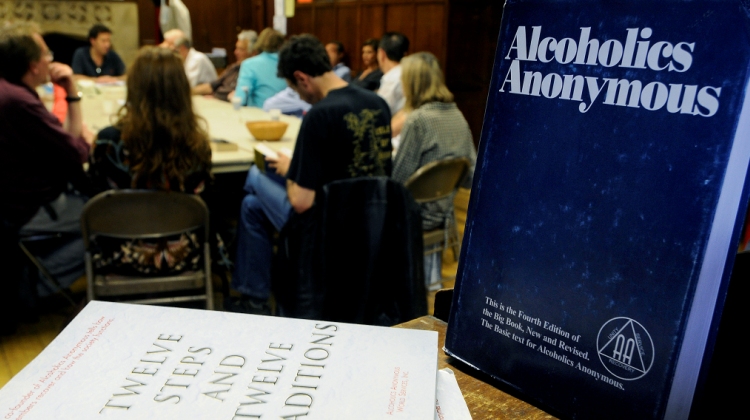
Thinking back to my earlier days in the AA Fellowship, I often neglected the core principle of Tradition One. I was full of my own suffering, which often caused self-centeredness and a focus upon expressing my own pain. While this is understandable, it was not always in my own interests, as I would often express a very negative outlook. I would leave meetings with even lower self-worth after sharing in this way.
I would also share divisive views in relation to the AA programme, which I struggled to relate to and accept. I can see now that this type of sharing was harmful to my relationships within AA, not in my own interests, and potentially harmful towards vulnerable newcomers.
Contrary to popular belief, AA meetings are not group therapy in the traditional sense, nor are they the same as groups that exist in treatment settings, which are generally facilitated by a therapist or professional and are geared towards direct feedback, support, and challenge.
AA provides plenty of one-to-one support through its sponsorship system and the mutual support of “trusted friends” within the Fellowship. Sharing complex problems and divisive issues on a one-to-one basis is often more beneficial and confidential than sharing everything we think and feel in meetings.
Ideally, an AA meeting is a space for sharing our drinking histories with each other, how we came into recovery, how we practice the suggested programme of recovery, and what our lives are like today as a result of “practicing these principles in all our affairs.” The “primary purpose” of each AA group is to carry a message of recovery to the alcoholic who still suffers. That requires a general focus upon a common solution in meetings — the application of recovery principles in relation to life on life’s terms and our problems with alcohol.
There is a time and place within the AA Fellowship for expressing our more personal problems and troubling emotions with each other that tend to offer the best, most constructive, and most confidential support. This is often through one-to-one interactions with a sponsor or other trusted friends within AA.
There is also a space for discussing the internal politics of the AA group or other potentially emotive or divisive issues — a group “conscience” meeting — which is set aside for such discussions. Group “conscience” and “business” meetings are strongly influenced by the 12 Traditions, which guide them in a healthy and constructive way to deal with group issues. This allows general AA meetings to focus upon the primary aim of carrying a message of recovery “to the alcoholic who still suffers.”
I am all for “keeping it real” in AA meetings, but we can do this with spiritual principles in mind and while being thoughtful of our impact upon the newcomer. Sharing is not policed in AA, and freedom of speech is allowed, but we ought to use our discretion in relation to the welfare of others and remember why we are actually at an AA meeting. It’s worth asking ourselves: does what I’m about to say contribute to group unity and the common welfare of all within the group? Does it contribute positively towards the group’s primary purpose?
There are lots of opportunities for therapeutic sharing in AA with individuals who know and understand us and can respond to our difficulties directly. There is no need to “get it off my chest” in meetings, in my view, when more appropriate support within the Fellowship is available.
I understand that mine is the viewpoint of someone in long-term recovery whose focus is upon service to others in meetings. The newcomer to AA, and those in early recovery, often need to go through a process of healing, change, and growth, and sharing in an uninhibited way in meetings may be part of their process of recovery. I am not being judgmental of this — just offering a viewpoint that goes beyond this stage of the recovery process.
The above article has been published in the January 2026 edition of AA SHARE magazine under the title Positive Contribution.
 12-STEP PHILOSOPHY
Thanks for that Steve. It’s a good read.
Andrew
LikeLike