By Steve K
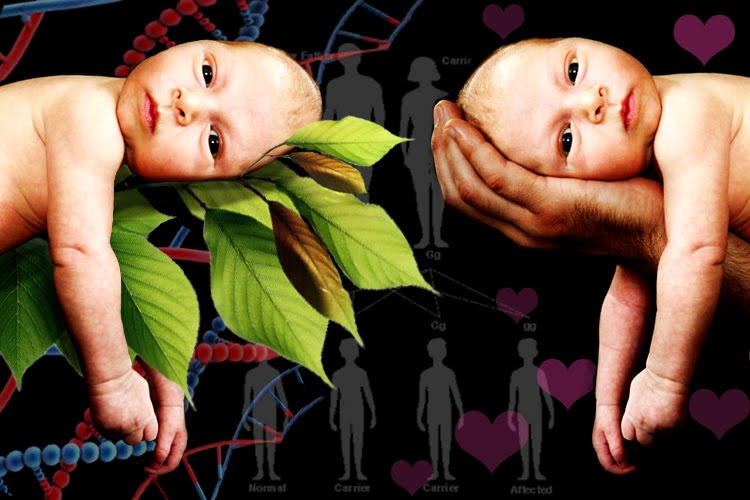
In Alcoholics Anonymous, The Doctor’s Opinion describes the alcoholic as suffering from a physical sensitivity to alcohol combined with a mind that returns to drinking despite harmful consequences. Many people in Alcoholics Anonymous (AA) understandably identify with this and conclude that they were, in some sense, “born alcoholic.” Yet suggested alongside this medical point of view is another, often less explored observation – that the alcoholic is often maladapted to life.
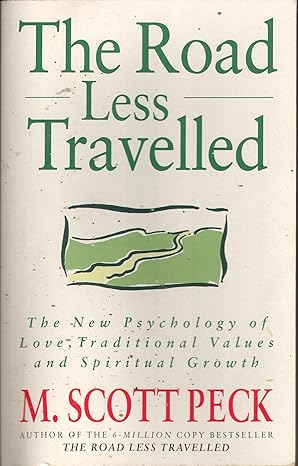
This raises an important question: what does it mean to be maladapted, and how does this condition develop? In The Road Less Traveled, M. Scott Peck suggests that patterns of behaviour, emotional responses, and ways of relating are often passed from one generation to the next—what he refers to as “the sins of the father.” While biology no doubt plays a substantial role in alcoholism for many people in the rooms of AA, the ways we learn to cope with life—often shaped by our early environment—are equally significant in understanding how addiction develops and takes hold of us.
While I identify with the suggestion of a physical sensitivity to alcohol, I am convinced that my developmental experiences growing up significantly shaped my emotions, attitudes, and relationships with people and mind-altering substances, particularly alcohol.
My biological father was an alcoholic, who spent the majority of the first few years of my life in prison. My mother struggled emotionally and financially through a lack of family support and society’s disapproval of single parenthood during the 1960’s.
She remarried in the early 70’s to another alcoholic, who was also, in practice, unable to love the children he’d taken into his care. I felt rejected during my adolescence and was emotionally abused on a regular basis by my stepfather. I witnessed much conflict in the home caused by my stepfather’s alcoholism and my mother’s angry response to it. As I grew older, anger seemed the most commonly expressed emotion in their relationship and was also directed towards me and my younger brother.
My family moved into a pub when I was about twelve years old. My stepfather’s drinking grew worse and so did the arguments, emotional neglect, and mistreatment by him. I began drinking regularly when I was around 14 and was addicted to smoking and drinking at 15 years old. I began behaving in ways that I had witnessed growing up and was consumed with a sense of rejection, anger, and sadness. I felt essentially unloved most of the time and behaved accordingly, with poor self-regulation which brought even more rejection, criticism, and distance from my parents.
These were my formative experiences of relationships, conflict, and alcohol misuse and dependency. They have had a profound impact upon me and have no doubt shaped the expression of any inherited predispositions I may have been born with, both biologically and in terms of character.
In this sense, what is described in Alcoholics Anonymous as being ‘maladapted to life’ can be understood, at least in part, as the natural outcome of such developmental experiences.
I went into my early adulthood living out the well-documented consequences of ‘adverse childhood experiences’ (ACEs)—addiction, mental and physical health difficulties, unemployment, and offending behaviour.
Modern theory and research recognise the bio-psycho-social causes of addiction, and therefore the need to treat the whole person within their social context. Similarly, 12 Step recovery views addiction as an illness of the mind, body, and spirit—one that is addressed not only through individual change, but through relationships and supportive community.
If addiction is understood as a combination of biological vulnerability and developmental experience, then recovery is not simply about abstaining from alcohol, but about learning new ways of living and relating. It involves addressing not only the physical aspect of the illness, but also the emotional and relational patterns that made alcohol seem necessary as a way of coping. It requires us to develop what the co-founder of AA Bill Wilson described as ‘emotional sobriety’.
The ‘sins of the father’ are not simply moral failings, but patterns of behaviour, emotional responses, and ways of coping that are passed from one generation to the next. In this sense, being ‘maladapted to life’ is an understandable outcome of both inherited vulnerability and our formative life experiences.
Recovery through the 12 Steps, and any ‘outside help’ that we need, offers the possibility of changing maladapted patterns of relating into more helpful and growth-promoting ways of being. While we are not responsible for what we inherit from others, the self-awareness we gain in recovery places responsibility on us to address and change our maladaptation using the tools available to us: human support, medicine and spiritual principles.
Through awareness, support, and a willingness to change, it is possible to develop a new way of living—one that is no longer governed by our past, but informed by it.
The former children’s TV presenter and child welfare campaigner Baroness Floella Benjamin has often said that “childhood lasts a lifetime”. There is much truth in this, as recognised in developmental psychology and attachment theory, both of which highlight the profound impact of early life experience. However, this is not the same as destiny. Human beings have a remarkable capacity to relearn and to change attitudes and behaviours that no longer serve them or are harmful. There are countless examples of people who have transformed what they were given in childhood.
 12-STEP PHILOSOPHY