
By Steve K
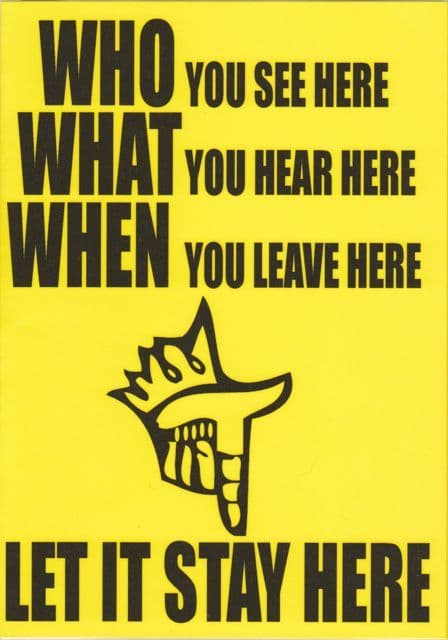
The ‘Yellow Card’ is a widely used Alcoholics Anonymous (AA) GB Conference-approved call to conscience in relation to anonymity and confidentiality. The card is a reminder to not disclose any AA member’s identity outside of the Fellowship or to repeat any identifying private disclosures outside of AA meetings.
The following words are printed on the card:
Who You See Here
What You Hear Here
When You Leave Here
Let It Stay Here
These words are primarily aimed at protecting anonymity, which is a spiritual and pragmatic principle within the AA Traditions. They also suggest that respect and discretion be used regarding the personal information and disclosures of AA members. What is heard in AA meetings should not be repeated in ways that could harm or break anonymity.
The aim of the Yellow Card is to promote an environment of confidentiality, safety, and equality. This in turn encourages honest sharing and a willingness to be vulnerable in meetings. Honesty is regarded as an essential aspect of recovery.
There is also a wider call to conscience associated with the Yellow Card in relation to gossip and judgementalism outside of AA meetings. AA members often link the cautionary statement “gossip kills”, which isn’t in any Conference-approved literature but has become established through AA’s oral tradition (sayings and phrases often repeated in meetings). Clearly, gossip and negative judgement about AA members breaks trust and unity within the Fellowship and causes hurt and resentment which are harmful to recovery.
Gossip between AA members about another AA member or their ‘share’ (if heard first hand) aren’t technically a breach of the Yellow Card, as anonymity hasn’t been broken, nor has confidentiality in a strict sense. However, if discussion is critical, unkind, or judgemental it is opposed to the ‘spirit’ of confidentiality, and the spiritual principles AA encourages its members to practice— “love and tolerance is our code.” We all deserve compassion and understanding in relation to our shortcomings—which is not the same as condoning unacceptable behaviour in each other.
It’s not uncommon in my experience for AA members to misunderstand the Yellow Card and use it as a defence against being held accountable for their unhealthy behaviour. There is such a thing as healthy judgement and appropriate boundaries regarding personal conduct and relationships in AA, and we all have a right to personal feelings about others and to express them to ‘trusted friends.’
The Yellow Card does not explicitly address interpersonal discussions between AA members outside of meetings, although it calls for discretion, respect, and awareness of spiritual principles when doing so. Our tone and intention are important, as are self-awareness and humility when discussing any interpersonal tensions or conflict.
Ultimately, the Yellow Card is a spiritual reminder rather than an enforceable rule or mandate. It’s an appeal to conscience to respect each other and to protect anonymity, trust, and unity within the AA Fellowship. It’s not a licence to control each other; or to protect us from the interpersonal difficulties that inevitably arise in all human relationships. These are opportunities for spiritual growth and to practice emotional sobriety with each other.
 12-STEP PHILOSOPHY