By Steve K.
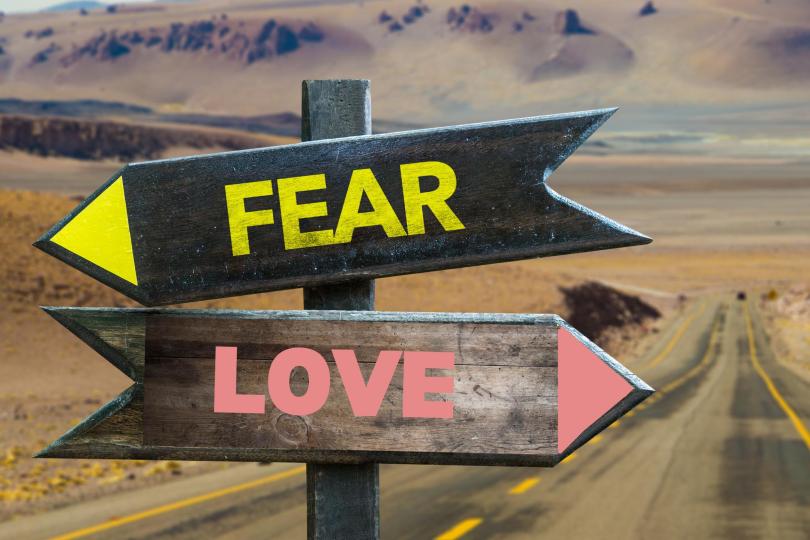
In Alcoholics Anonymous, fear is treated not as a mere emotion but as a spiritual condition— “an evil and corroding thread,” woven through the lives of those who suffer from addiction. This language seems to paint fear as a moral defect, as though it were inherently wrong or incompatible with spiritual life. This view becomes more balanced when we distinguish (See Step Four in the Twelve Steps and Twelve Traditions) between natural, healthy instinctual fear and the chronic, neurotic fear often created by past wounds and trauma.
The Big Book’s focus is exclusively on this second category: the entrenched fear that distorts our perceptions, relationships, and behaviour. It is fear that becomes self-centred: fear of rejection, fear of abandonment, deep insecurity, fear of not being good enough. These inward-centred forms of fear are the legacy of trauma, shame, early emotional conditioning, and unmet needs. They do not protect life; they restrict it. These ego-centred, distorted fears prevent emotional and spiritual maturity.
When AA calls fear “corroding,” it refers to the way this kind of fear damages connection—with people, with a higher power, and with one’s own deeper self. In this sense, fear becomes a character defect not because it is morally bad but because it interferes with love. It blocks trust, intimacy, and the humility needed for spiritual growth.
The Big Book does not fully clarify the psychological roots of the distorted fear that many who suffer addiction experience. It tends to assume that fear arises from insufficient faith rather than from developmental wounds. This is an understandable limitation of its time and the somewhat religious perspective of its author, Bill Wilson. Today, we recognise that many alcoholics carry the residue of early emotional injury and their fear is not simply egoic but somatic—carried in the nervous system, not chosen.
However, the AA programme’s solution still holds true: fear is met not with suppression but with faith and practice—spiritual action, connection, honesty, and willingness. AA’s path is one of learning to live in love rather than fear.
Healing Fear Through Love
The contrast between fear and love aligns with AA’s deeper spiritual message. If fear is a state of contraction and isolation, then love is its opposite: expansion, connection, and presence.
Fear clings; love releases.
Fear isolates; love unites.
Fear distrusts; love trusts.
Fear dwells in the past and future; love lives now.
In this way, the AA programme can be understood as a movement from fear towards love. Steps Two and Three invite trust; Steps Four to Seven confront and dissolve fear-laden patterns of behaviour; Steps Eight and Nine repair relationships; and Steps Ten through Twelve cultivate daily practices of love, humility, and service.
The Big Book’s instruction is essentially a call back to love. It asks us to step out of the story of fear and into the presence of a loving intention for life.
It’s often the case that trauma and conditioning gave rise to self-centred fear long before the alcoholic ever had a chance to choose differently. Love, then, becomes not just a moral stance but a healing force. Love acts on the wounds that fear created. It allows the nervous system to feel safe again.
AA frames this healing as “faith”— in its deeper sense, faith is simply trust in the goodness of life, trust that one is held by something greater than the ego. For some, that is God; for others, it is love itself.
Choosing Love as a Practice
What AA shares with wisdom traditions and modern psychology is the belief that our mental orientation matters. We can choose to approach life from the perspective of fear or from the perspective of love. This choice is not always easy—especially for those with trauma histories—but it is empowering.
Love is not merely an emotion; it is a practice, a stance, a discipline.
It shows up in forgiveness, patience, compassion, and kindness.
It shows up in letting go of demands, expectations, and resentments.
It shows up in the willingness to accept others as they are rather than as we’d like them to be.
It shows up in taking responsibility for our inner life rather than blaming circumstances or people.
As we practice these qualities—through inventory, amends, fellowship, and service—our fear begins to soften. We become less defensive, less mistrustful, less controlled by old wounds. We become more able to give love and receive it. Our heart and world enlarge.
“What we give we receive” fits seamlessly with the AA understanding that helping others helps us. Love expands by being shared. It becomes a lived reality rather than an ideal.
At the heart of recovery lies this transformation—from a fearful life of isolation and self-protection to a loving life of open-hearted connection and purpose.
From Fear to Love: A Spiritual and Human Journey
Ultimately, the movement from fear to love is the essence of spiritual growth. Whether through AA, psychological healing, or contemplative practice, the task is the same: to recognise the fearful parts of ourselves, honour their origins, and gradually release their hold.
The AA Big Book, despite its sometimes-moralistic language, calls us toward this journey. It points to a way of living grounded not in fear’s inner contraction but in love’s open, generous, and trusting spirit.
To choose love is to choose a fuller life—to grow, to heal, and gradually to become whole. Alcoholics Anonymous describes this unfolding change as a spiritual awakening, the lived experience behind the Promises on pages 83–84. It is simply the natural fruit of a life no longer ruled by fear.
Note: The above essay is informed by a previous post I wrote titled ‘Recovery Is Practicing Love Over Fear’.
 12-STEP PHILOSOPHY