Introduction
By Steve K
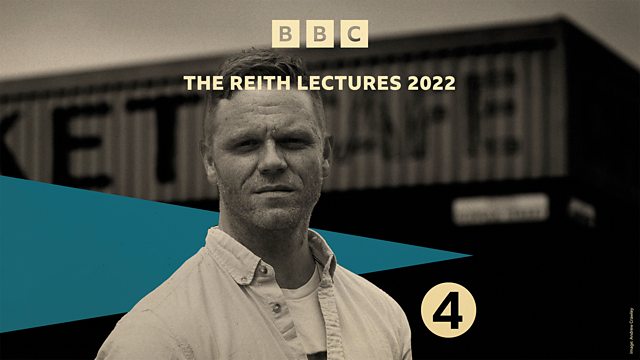
The following personal account is an excerpt from Darren McGarvey’s 2022 Reith Lecture Freedom from Want.
In it, McGarvey recalls his early sobriety in “the rooms” of mutual-aid recovery meetings, describing the community, accountability, and principles that helped him get well. Although he doesn’t specify the name of any particular fellowship, his account will feel familiar to many who have experienced recovery through 12 Step or other peer-support groups.
In the lecture, McGarvey weaves his personal story into a broader social and political reflection on poverty, inequality, and what it means to claim “freedom from want.” While much of what he describes resonates strongly with 12 Step principles, his final sentence — “We claim our right to liberty from addiction by taking that freedom ourselves” — leans toward a more secular or self-agency emphasis than the traditional Step One focus on surrender to a Higher Power.
This language of self-agency can be understood as an empowered choice to engage fully in recovery — an interpretation embraced by many in both secular and spiritual recovery communities who seek to bridge the concept of powerlessness with active participation in sobriety. The interpretation of “powerlessness” in empowering terms frames it as a conscious decision to surrender rather than passive helplessness. McGarvey’s closing line can be seen in that light — as a way of expressing recovery principles in language that resonates with a broader, more diverse audience.
Freedom From Want
By Darren McGarvey
In January 2013, at the end of a 7-day drinking spree, about to open another bottle that would hopefully tide me over until the off-licence opened, a woman whom I have never met, sent me a message on social media. It was a link to an article that would snap me out of my drunken daydream. Six Harsh Truths That Will Make You a Better Person. I figured it would pass some time and began reading. By the time I got to number one on the list, Everything Inside You Will Fight Improvement, the urge to continue drinking quite simply left me.
What had occurred was the profound psychic shift only a high, targeted dose of the truth can bring about. For years, I had dined out on my trauma, my losses, my grief, and my anger, using them as excuses of varying plausibility to justify my descent into alcoholism. It’s true that I faced significant adversities in my youth. They had a lasting impact on my character and emotional nature for better and for worse. But at some point, I lost touch with the idea that a better life was even available to me.
I became resigned to the misery of depression, the painful solitude of self-isolation and the invigorating if toxic effects of my righteous anger. I was sick because the world was sick. And I couldn’t get better until the world improved. My solution was to try and make the world a better place from within the confines of my sick mind, but oddly, nothing ever seemed to work. The article read like having a mug of cold water thrown in your face. My blunted faculties sharpened. A self-awareness pierced the thick fog of denial.
And after I finished reading the piece, I poured what remained of my alcohol down the kitchen sink and told my long-suffering flat mate I was done with the drinking. From that day my recovery began in earnest, and I wouldn’t lift a drink for a further two years. And save for a few slips along the way, I have been alcohol and drug free for most of the last ten years.
How was this achieved? Where did the power to stop drinking come from? A power which had eluded me almost every day of my twenties… I got sober in run-down community centres and churches, where no experts or professionals were present. Indeed, my many interactions with public services throughout the years played some part in my adopting the false belief that I would never get free of addiction.
Instead, I got well in rooms where the advice dispensed came from other sufferers of the problem and not from medical men and women, or well-meaning theorists. Mutual-aid groups where there are no hierarchies, no professional titles, and no state or private funding. I learned how to traverse the greatest challenge I have ever faced as an individual – the illness of addiction – merely by following the suggestions of those who had gone before me. I did this in a community where it is understood that we could only ever hope to be of any meaningful or lasting use to that community by first making ourselves accountable. Accountable for whatever part we play in our adverse circumstances, accountable for the harms we have caused, for our dishonesties, our attitudes and our behaviours, and committing to living by certain principles in all of our affairs.
In those rooms, we achieve freedom from the want for easy solutions. Freedom from the want for something to numb the pain and confusion of life. And we achieve this freedom by learning to reconcile our individual needs with the world as it is around us. We claim our right to liberty from addiction by taking that freedom ourselves.
 12-STEP PHILOSOPHY
This piece is excellent. Thank you.
LikeLiked by 1 person