
By Steve K.
Today I’m 15 years alcohol free. I don’t want or need to drink to escape life anymore, whatever life brings my way, good or bad. Addiction recovery, for me, both in a physical and emotional sense, has been a long, slow process of change and growth. It started a long time before I eventually stopped drinking, which may sound strange to some readers.
I first made efforts to stop drinking in my early 20’s following a serious suicide attempt, by renewing my interest in keeping fit and sporting activities. I’d stay sober for short periods and used exercise to fend off depression. Whenever I stayed sober my brain would come alive and begin to function and I became interested in learning and developing myself educationally and vocationally. I left school with no qualifications and so had to start by doing basic lessons in English and maths. At the time, I didn’t realise just how deeply psychologically addicted I’d become to alcohol and other drugs and would relapse into binge drinking every so often.
I ended up in trouble with the police yet again for fighting while out drinking with a friend and was sent to prison for 12 months. This was the second time I’d been sent to prison within a 2-year period after nearly 10 years of court appearances, virtually all of which were for alcohol and drug related offences. I had been receiving fines and community service punishments from the courts since the age of 15. I was 25 years old when I was released from prison in September 1990 for the last time. After another 6 months of increasingly excessive drinking, I reached out to Alcoholics Anonymous (AA) and was introduced to the depth of my alcohol dependency.
It was the start of a long struggle towards acceptance and surrender. However, I did stay sober for increasingly longer periods and went to college and then on to Higher Education, before ending my studies prematurely due to serious problems with depression and occasional lapses into drinking.
I eventually realized that I had to stay sober regardless of any difficulties with my health, depression, or relationships. I continued to take part in therapy when available, engaged with AA, and went back into education to obtain a professional qualification. I was nearly 40 when I had my last drink of alcohol. Since then, I’ve continued to have difficulties primarily with my physical health, but also with depression. Yet my commitment towards sobriety, emotional and spiritual health, healing, and growth, and being helpful to others, has increased year on year.
Erwin James’s Story of Redemption
I’ve recounted some of my story in brief in the hope that I can make some comparisons with a journalist named Erwin James, who is the author of a book I’ve just finished reading called ‘Redeemable – A Memoir of Darkness and Hope’. His autobiography is a moving story of redemption and rehabilitation. James’s childhood was tragic and included neglect and abuse leading to deep self-loathing, alcohol dependency, rough sleeping, violent criminal behaviour, and eventually to the murder of two people. He served 20 years of a life sentence and describes his journey through the prison system giving an honest account of his process of change, primarily through therapy, education, and with the help of others. The book is a powerful testament to the value of psychological therapy with a dedicated and compassionate therapist to change a person’s life for the better. Erwin James is now an accomplished author of three books, a freelance writer and a respected columnist and contributor to the Guardian newspaper. He was released from prison in 2004 and is now a patron of several worthwhile charitable organisations.

As I was reading Erwin James’s life story I identified with aspects of his experience, his emotional insecurity and low self-esteem, his difficulty with intimacy, and his relationship with alcohol and anger. His family circumstances while growing up have been described as ‘brutal’ and were more extreme and neglectful than mine were. In relation to modern research, he would score much higher than me in terms of ‘Adverse Childhood Experiences’ (ACE’s), but we both emerged from adolescence deeply insecure, feeling unloved and empty, with a tendency towards anger, depression, alcohol abuse and self-destructive behaviour.
Like James, a lot of my dysfunctional behaviour involved drunken violence towards others. However, in my case, it also involved violence towards myself in the form of various acts of self-harm. I also abused other drugs to the degree of using them intravenously, although intermittently, over a period of several years during my late teens and early 20’s. Consequently, I contracted the Hepatitis C virus.
Both of us ended up with a string of criminal convictions by our early to mid-20’s, most of which were alcohol related. We were also in and out of various types of manual employment, with only a basic level of education. However, at this point James’s offending became mainly acquisitive and involved serious violence in the process of his crimes. He also experienced extreme rootlessness related to unreliable parenting (he was taken into the care system between the ages of 10 – 15), and a rough sleeping lifestyle.
At 25, I was in prison for wounding a doorman, while James went on the run and joined the French Foreign Legion to escape a double murder charge. The killings took place during violent muggings and robberies. He then spent nearly two years in the ‘Legion’ before handing himself into the French authorities and eventually facing justice in England, and a life sentence in prison.
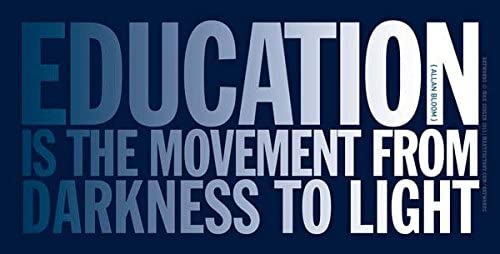
Near the end of my time in prison, I started some education classes and realised that I was intelligent and had a good capacity for learning. Upon my release I enrolled on an Access to Higher Education course for adult learners at the local FE college. James also discovered his intelligence and his ability to read and learn while in prison, encouraged by a prison psychologist who gave him books and motivated him to engage in classes.
 12-STEP PHILOSOPHY