The Origins of the Twelve Steps
By Steve K
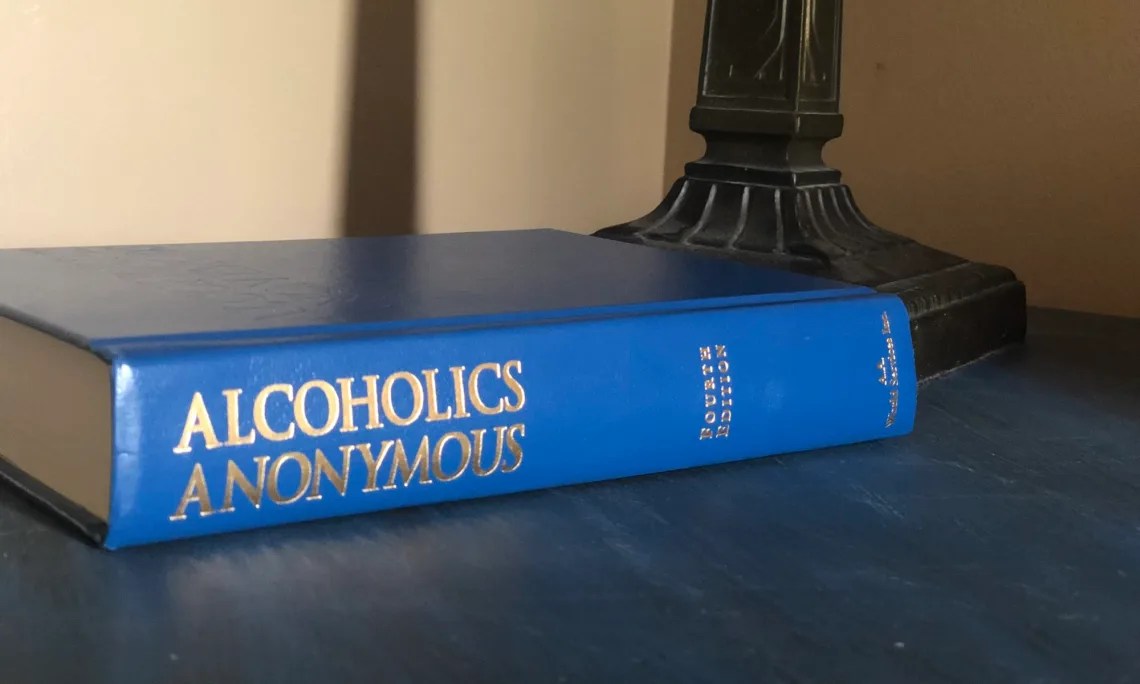
The Twelve-Step philosophy of Alcoholics Anonymous (AA) is an integration of the early medical model of alcoholism, basic Christian principles, philosophy, and psychology. Bill Wilson, co-founder of AA, in collaboration with the early members of the Fellowship wrote the Twelve Steps and the book ‘Alcoholics Anonymous’ (aka the Big Book, first published in 1939). Wilson was influenced by these disciplines and certain individuals.
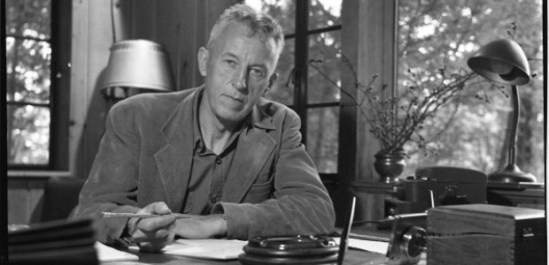
Bill Wilson – Co-Founder of Alcoholics Anonymous
The origin of AA’s concept of recovery from alcoholism by means of a “spiritual experience” can be said to have begun with the famous Swiss psychiatrist Dr Carl Gustav Jung. Jung suggested to one of his patients, Rowland Hazard, that the only solution to his hopeless condition was a spiritual or religious conversion experience. Rowland Hazard then sought out this experience in the non-denominational Christian ‘Oxford Group’. He then passed this message onto Ebby Thatcher who was a drinking friend of Bill Wilson.
The Oxford Group placed emphasis upon the spiritual principles of surrendering, self-survey, admission of faults, making amends, asking God for guidance, and witnessing. Wilson adapted these tenets and added Steps 1, 2, 6, 7 and 10. This is how the Twelve Steps came into being, as the method of change required to bring about the solution to the problem of alcoholism. Wilson had gained an understanding of the ‘problem’ while being treated for alcoholism in hospital.
While in the Towns Hospital in New York, Bill Wilson received his understanding of alcoholism as an illness of the mind and body from his physician Dr William Silkworth. The early medical model of alcoholism suggested a mental obsession combined with a physical sensitivity. The medical view of the time considered advanced alcoholic addiction to be a pathological craving condemning the sufferer to death. In the ‘Doctor’s Opinion’, at the beginning of the Big Book, Silkworth suggests that the only hope for the chronic alcoholic is an ‘entire psychic change.’
The Pragmatic and Pluralist Influence of William James
The liberal and pragmatic principles of AA were strongly influenced by the great American psychologist and philosopher William James. James’s book ‘The Varieties of Religious Experience’ had a profound effect upon Bill Wilson while he was in the Towns Hospital. The book, based on James’ Gifford lectures (1901-1902), is a foundational psychological study exploring the personal, subjective nature of religious experience rather than organised religion or theology. His work identified commonalities within subjective spiritual/religious experiences across the traditions.
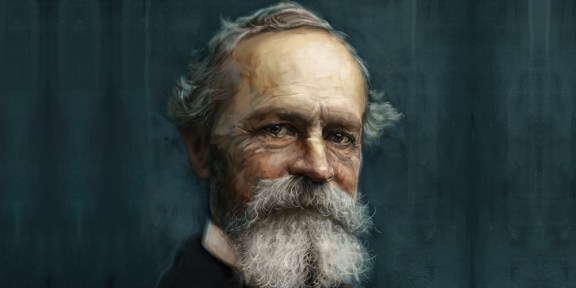
William James – The Father of American Psychology
William James was known for developing the philosophy of ‘pragmatism’. He suggested that in matters of faith, rather than fact, it’s how helpful the belief is to the individual that’s important. In AA, it is often paraphrased as “what works for you”. In the ‘Twelve Steps & Twelve Traditions’, Wilson states that:
“Alcoholics Anonymous does not demand that you believe anything. All of its 12 Steps are but suggestions.”
p. 26.
AA is truly against dogmatism and only requires an open minded attitude. Members have the freedom to choose a God or “Higher Power” of their own understanding. Individuals of an atheist, agnostic, or humanist persuasion often use the AA group and the 12 Steps as a collective “Power Greater” than themselves that can help bring about psychological and behavioural change.
Many of the early members of AA were agnostic or atheist. Wilson himself had walked away from his Christian upbringing throughout his drinking career, only renewing his belief in God when he became sober and involved with the Oxford Group. The founding members of AA had to make compromises between those who were religiously minded, and those members who were agnostic or atheist. The desire for an inclusive fellowship and program of recovery led to the suggestions of a “Power Greater” and “God as we understood Him” contained in the Steps. Tradition Three, also states that “The only requirement for AA membership is a desire to stop drinking.” Members are welcomed regardless of faith, gender or any other differences.
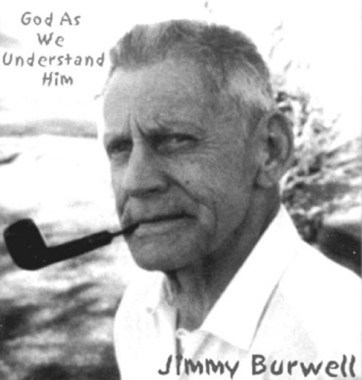
Jim Burwell – early AA atheist.
The diversity of beliefs within AA necessitates the liberal values of tolerance and acceptance of difference. The primary purpose of helping each other to recover from alcoholism being the main focus of the AA group, and is what binds those differences together. The AA historian Ernest Kurtz referred to this principle as “joyous pluralism” in his book ‘Not-God, A History of Alcoholics Anonymous’. (P. 151, Hazelden Press, 1979)
It is worth mentioning at this point that several empirical research studies between 2002-2007, have shown that positive drinking outcomes are achieved due participation in AA, regardless of religious or spiritual belief. Tonigan, Miller, and Schermer’s (2002) study of atheists and agnostics in AA, demonstrated that attendance at meetings was strongly correlated with greater abstinence, regardless of God belief.
A Secular Perspective
The Twelve Steps of AA can be viewed as a set of principles and actions practiced to bring about positive changes in thinking, behaviour, and moral and spiritual awareness. These guiding principles, if practiced over time, have been found by AA members to facilitate deep inner changes and awareness sufficient to recover from alcoholism and live a more satisfying life.
The Twelve Steps can be understood from a secular perspective through the prism of reason, experience, and shared human values, without the necessity of a belief in God. AA is a diverse fellowship, built upon liberal as well as spiritual principles, which has from its inception always included members of different world views; including agnostics, atheists, and humanists. A “Power Greater” can be understood in terms of the collective power and inspiration of the Fellowship, and the wisdom, love, and spirit of humanity within its members.
The Steps are often referred to in AA as a “way of life” to be practiced, and spirituality as a “way of being.” Alcoholics Anonymous values the way one is and the way one lives rather than what one believes.
Understanding the Twelve Step program of AA from this perspective, and using the freedom to choose one’s own concept in relation to God or a “Higher Power”, enables a more humanistic, or broadly spiritual interpretation of the Steps.
Pragmatic Quotes from AA Literature
“When, therefore, we speak to you of God, we mean your own conception of God. This applies, too, to other spiritual expressions which you find in this book. Do not let any prejudice you may have against spiritual terms deter you from honestly asking yourself what they mean to you.”
Alcoholics Anonymous, 3rd ed., p. 47.
“The wording was, of course, quite optional, so long as we voiced the ideas without reservation.”
Alcoholics Anonymous, 3rd ed., p. 63, Third Step Prayer.
When told that some Buddhists wanted to start AA groups in Thailand but wished to change the word “God” in the Steps to “good”, Bill wrote:
“To some of us, the idea of substituting “good” for “God” in the Twelve Steps will seem like a watering down of AA’s message. We must remember that AA’s Steps are suggestions only. A belief in them as they stand is not at all a requirement for membership among us. This liberty has made AA available to thousands who never would have tried at all, had we insisted on the Twelve Steps just as written.”
Alcoholics Anonymous Comes of Age, P. 81, 1957.
 12-STEP PHILOSOPHY